We are your trusted health partner. Local doorstep deliveries is within the hour .We are Licensed and Regulated by the Pharmacist's Council of Nigeria(PCN).Prices displayed here may differ due to inflation.
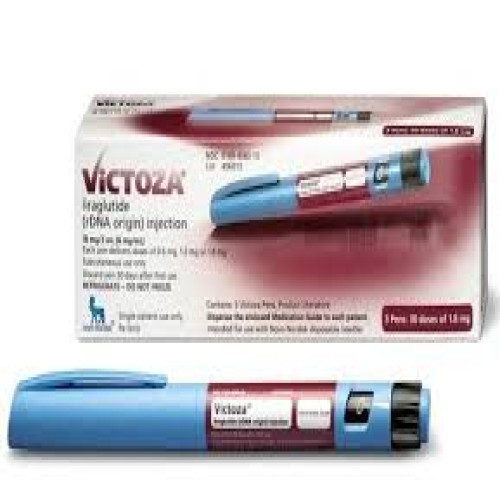
Victoza is a prescription-only, high-potency Glucagon-Like Peptide-1 (GLP-1) receptor agonist. It is supplied as a pre-filled, multi-dose adjustable injection pen containing Liraglutide solution at a concentration of 6mg/mL.
A single pen contains 3mL of solution (18mg of total active drug) and allows the user to dial structural doses of 0.6mg, 1.2mg, or 1.8mg. It is administered via a Subcutaneous (S.C.) injection once daily to manage Type 2 Diabetes Mellitus. Beyond balancing blood sugar metrics (HbA1c), Victoza provides significant clinical reduction in major adverse cardiovascular risks.
Victoza mimics a natural metabolic hormone called GLP-1 that your body releases after meals to keep chemical and glucose balances smoothly coordinated:
Glucose-Dependent Insulin Release: It signals the pancreas to secrete the right amount of insulin when your blood sugar spikes, helping cells clear glucose from your blood.
Suppresses Excess Sugar Production: It tells the liver to stop generating and releasing unnecessary glucose into your system when it is not needed.
Delays Gastric Emptying: It slows down the speed at which your stomach digests food. By keeping food in your stomach longer, it provides a smooth, gradual release of nutrition, suppresses intense hunger cravings, and increases how long you feel full after meals.
Type 2 Diabetes Mellitus: Improving long-term blood sugar metrics (HbA1c) in adults and children aged 10 years and older alongside a balanced diet and routine physical exercise.
Cardiovascular Risk Reduction: Lowering the risk of major adverse cardiovascular events (such as non-fatal heart attacks, strokes, or cardiovascular death) in adults living with Type 2 diabetes and established heart disease.
🚨 Absolute Safety Requirement: Victoza must strictly never be used if you or anyone in your family has ever had Medullary Thyroid Carcinoma (MTC), or if you live with Multiple Endocrine Neoplasia syndrome type 2 (MEN 2). Animal studies noted an increased risk of thyroid C-cell tumors with GLP-1 receptor agonists. Contact your physician straight away if you notice a sudden lump, swelling, or persistent hoarseness in your neck.
History of Pancreatitis: It has not been studied in individuals with active pancreatic disease. Avoid or use with extreme caution if you have a past history of inflammation of the pancreas (pancreatitis).
Severe Gastrointestinal Disease: Because it significantly delays stomach emptying, it is not recommended for patients with severe gastroparesis or advanced inflammatory bowel issues.
Type 1 Diabetes Warning: It is strictly not indicated for use in Type 1 Diabetes or to treat Diabetic Ketoacidosis (DKA).
Pregnancy and Breastfeeding: Victoza is highly unsafe during pregnancy. If you plan to become pregnant or discover you are pregnant, stop the medication immediately and contact your physician. Do not use while nursing.
The Strict Once-Daily Routine: Inject your dose exactly once a day, at any hour of the day, completely independently of meal times (with or without food). Try to take it at roughly the same time each day to maintain stable metabolic patterns.
The Subcutaneous Site Rule: It must be injected into the fat layer right under the skin—standardly in the abdomen, thigh, or upper outer arm. Never inject Victoza into a vein or a muscle. Rotate your injection site location slightly every single day to protect the underlying skin tissues.
The Dose Progression Sequence: Most treatment lines begin at a low starter dose of 0.6mg once daily for the first week to allow the stomach to gently adapt to the medicine. On week 2, the dose is stepped up smoothly to 1.2mg once daily (the standard maintenance dose). If needed for further blood sugar control, your physician may instruct you to step up to the maximum dose of 1.8mg once daily.
1.Attach a fresh needle and check the window:Pen Prep.
Wash your hands. Pull off the pen cap, verify the liquid inside the glass reservoir is completely clear and colorless, and click or screw on a fresh, sterile disposable needle.
2.Perform a flow check on a brand-new pen:Flow Check.
Before using a brand-new pen for the first time, turn the dose selector to the flow check symbol (the line and drop icon). Hold the pen needle-up and press the button until a drop of liquid appears at the needle tip to clear trapped air.
3.Dial your prescribed dose, insert, and hold for 6 seconds:Delivery Mechanics.
Turn the dial until the window displays exactly your prescribed dose (0.6, 1.2, or 1.8). Clean your skin with alcohol, insert the needle straight into the skin fold, and press the injection button firmly. Keep the button pressed down fully and count to 6 slowly before pulling the needle out of your skin to guarantee delivery of the full dose.
4.Remove the needle and place the pen back in the fridge:Safe Storage.
Carefully unscrew or click off the used needle and discard it safely into a puncture-proof sharps bin. Pop the pen cap back on. Never store the pen with a needle attached.
As your gastrointestinal tract interacts with the delayed stomach-emptying properties of the molecule, you will likely notice typical brief updates, which are standardly mild and tend to fade after a few weeks of consistent use:
Gastrointestinal Shifts: Highly common, including mild nausea, brief vomiting, diarrhea, stomach bloating, gas, indigestion, or temporary constipation.
The Dehydration & Kidney Risk Note: Persistent nausea or vomiting can lead to fluid loss (dehydration). You must sip plenty of plain water and clear fluids throughout the day to keep your kidneys fully hydrated and protect them from sudden strain.
Minor injection site bruising, mild redness, or slight temporary dizziness.
What should I do if I accidentally miss my daily Victoza dose?
If you miss a dose, take it as soon as you remember, provided your next regular dose is not due within the next 12 hours. If it is already close to your next scheduled dose hour, skip the missed dose entirely and resume your normal daily routine at your next regular time. Never inject a double dose or take two doses on the same day to catch up.
Can Victoza cause dangerously low blood sugar (hypoglycemia)?
When used entirely by itself, Victoza has an exceptionally low risk of causing low blood sugar crashes because its action is completely glucose-dependent (it only works when blood sugar is elevated). However, if your physician pairs Victoza with high-potency diabetes drugs like Insulin or Sulfonylureas (like Glamide), your risk of a crash goes up. Your provider may slightly adjust those baseline doses down.
How must the pre-filled Victoza pens be stored?
Unused Pens: Keep your unopened Victoza pens inside their original cardboard box stored safely in the refrigerator between 2°C and 8°C. Never freeze them.
In-Use Pens: Once you use a pen for the first time, you can either keep storing it in the fridge or keep it at cool room temperature strictly below 30°C. An in-use pen is safe to use for up to 30 days before it must be safely thrown away, even if there is still liquid left inside. Protect the pen from direct light and excessive heat.
Advanced GLP-1 receptor protein therapies are temperature-sensitive and require strict supply chain protection to prevent counterfeit distribution. Victoza requires rigid supply chain auditing, manufacturer batch validation, and continuous, strict cold-chain verification ($2^{\circ}\text{C}$ to $8^{\circ}\text{C}$) from factory to patient. Hospital procurement managers, metabolic health coordinators, and individual patients can securely submit prescriptions and buy genuine, factory-authenticated Victoza 6mg/mL Injection Pens online through Sanlive Pharmacy & Stores for verified payment and rapid, temperature-secured, cold-chain validated delivery directly to your home, office, or clinical suite within Lagos, Abuja, Port Harcourt, and nationwide via our dedicated specialty pharmaceutical cold-chain distribution networks.
Important Notice: This information is for educational and institutional procurement support purposes only. Victoza is a high-potency, prescription-only metabolic and cardiovascular medication. Your entire therapeutic timeline, dosage progression, and routine clinical monitoring (including HbA1c metrics, eye health screenings, and kidney function tests) must be managed exclusively under the direct physical direction of a registered Endocrinologist or Physician. If a patient experiences persistent severe abdominal pain radiating through to the back, sudden jaundice, severe difficulty swallowing, or signs of an active anaphylactic reaction, stop using the medication immediately and seek urgent emergency medical evaluation at a hospital.
No reviews yet — be the first!
Log in to write a review.